

THE LONG ROAD HOME
85 YEARS SINCE THE NAZI OCCUPATION AND THE DEPORTATION OF SLOVENIANS
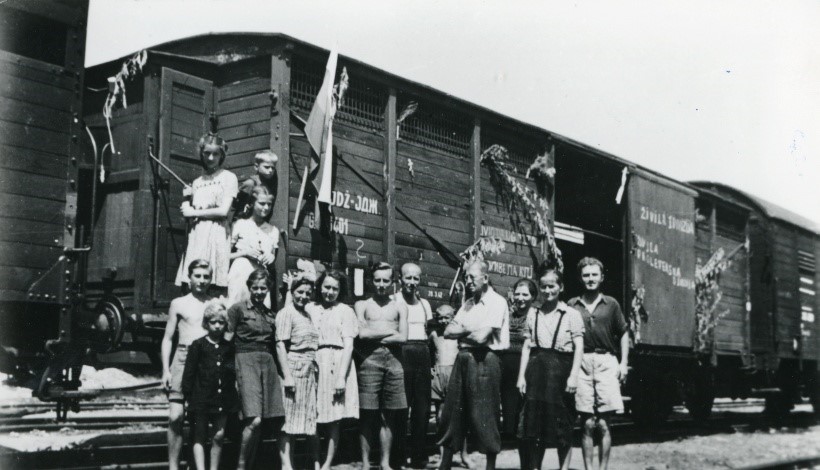
From June to September 2026, the exhibition The Long Road Home: 85 Years since the Nazi Occupation and the Deportation of Slovenians is on display at Krekov trg in Celje.
This year marks the 85th anniversary of the tragic events that profoundly affected the lives of countless Slovenian families. Following the capitulation of the Kingdom of Yugoslavia in April 1941, Slovenian territory was occupied and divided among Germany, Italy, and Hungary. Seeking to annex the occupied regions to their own states, the occupiers immediately began implementing harsh policies of denationalization.
Germany occupied the regions of Lower Styria, the Meža Valley, Upper Carniola, the northern part of Lower Carniola, and the northwestern part of Prekmurje. The first measures were aimed at erasing everything Slovenian: place names, personal names, and surnames were changed; associations were dissolved; Slovenian books were destroyed; and the Slovenian press was banned. German was introduced as the official language in public institutions. These measures were soon followed by further acts of denationalization, including the arrest and deportation of nationally conscious Slovenians and their family members, as well as the settlement of German colonists in the occupied territories.
To carry out the mass deportations, the occupation authorities established several collection and so-called “resettlement” camps in Lower Styria and Upper Carniola: at the Melje Barracks in Maribor, at Rajhenburg Castle in Brestanica, and at the Diocesan Institutions in St. Vid near Ljubljana, alongside numerous collection centres. Mass deportations began in June 1941 and continued systematically throughout 1942. Among the deportees were many teachers, priests, intellectuals, immigrants from the Littoral region, and other prominent figures of Slovenian cultural, social, and economic life. The deportations took place in three waves, with Slovenians forcibly resettled to territories in Serbia, Croatia, and Germany. In the process, all their property was confiscated.
These cruel events deeply affected the personal and family lives of countless people. On this anniversary, we respectfully remember all victims of occupation violence and forced exile. Their suffering, courage, and unwavering loyalty to the Slovenian nation remain a lasting reminder and a valuable part of our shared historical heritage. Their memory obliges us to preserve the truth about these events and to pass on the values of freedom, dignity, and national identity to future generations.